• About \ Suunnilleen

Thinking Metrics

Thinking Metrics

Author Archives: Ripsu-sama

CHESS ANALYTICS 00.2: Methods, Part 3: How to Read the Output Files

13 Saturday Jun 2026

Posted by Ripsu-sama in chess, chess analytics

≈ Leave a comment

Tags

chess, chess analytics, chess history, engine analysis, expected score, performance metrics, Stockfish, WDL evaluation, world championship

  • CHESS ANALYTICS 00.1: Methods, Parts 1 & 2: Measuring World-Championship Roads with Stockfish 18 WDL
  • CHESS ANALYTICS 00.0: List of Other Chess Analytics Articles
  1. From Numbers to Interpretation
  2. 1. The Main File Categories
  3. 2. First Rule: Know Whether the Number Is a Mean or a Sum
  4. 3. Second Rule: Separate Faced Difficulty from Caused Difficulty
  5. 4. Third Rule: Higher Does Not Always Mean Better
  6. 5. Fourth Rule: Raw CCP-v2 and Log CCP-v2 Are Different
  7. 6. Reading article_report.md
  8. 7. Reading all_metrics_3source.csv
  9. 8. Reading metric_ratios.csv
  10. 9. Reading player_summary.csv
  11. 10. Reading game_summary_readable.csv
  12. 11. Reading critical_moves.csv
  13. 12. Reading volatility_swings.csv
  14. 13. Reading hardest_positions.csv
  15. 14. Reading difficulty_critical_moves.csv
  16. 15. Reading ccp_hardest_positions.csv
  17. 16. Reading ccp_v2_log_hardest_positions.csv
  18. 17. Reading ccp_v2_log_critical_moves.csv
  19. 18. Reading ccp_v2_root_branch_summary.csv
  20. 19. Reading ccp_v2_root_branch_ply_summary.csv
  21. 20. Reading ccp_v2_root_branch_top_moves.csv
  22. 21. Reading ccp_v2_root_branch_payoff_moves.csv
  23. 22. Reading ccp_v2_root_branch_workload_rows.csv
  24. 23. Difficulty Share
  25. 24. Difficulty Pressure Quality, DPQ
  26. 25. Pressure Yield
  27. 26. Combining the Metrics: Common Interpretation Patterns
  28. 27. Style Profiles the Files Can Reveal
  29. 28. How to Compare Two Matches
  30. 29. A Simple Expert Reading Formula
  31. 30. Final Reading Checklist
  32. 31. The Main Lesson

From Numbers to Interpretation

The first methods article explained the WDL foundation: expected score, expected-score loss, WDL Accuracy, and the main performance metri.

The second methods article introduced the post-WDL difficulty layer: all-legal difficulty, CCP Search Difficulty, CCP-v2 recursive forcing burden, probe/confirm search, root-branch diagnostics, Difficulty Pressure Quality, and Pressure Yield.

This third part explains how to read the actual output files.

Continue reading →
CHESS ANALYTICS 04: Kasparov vs. Karpov matches of 1985, 1986, 1987, 1990, plus comparison from 1970s to 1990s

30 Saturday May 2026

Posted by Ripsu-sama in chess, chess analytics

≈ Leave a comment

Tags

chess, chess analytics, chess history, engine analysis, Karpov, Kasparov, performance metrics, Stockfish, WDL evaluation, world championship

  • CHESS ANALYTICS 00: Methods: Measuring World-Championship Roads with Stockfish 18 WDL
  • CHESS ANALYTICS 00.0: List of Other Chess Analytics Articles
  1. 1. CHESS ANALYTICS 04 part 1/2: the Kasparov-Karpov matches between 1985-90
    1. 1.1. Short verdict
    2. 1.2. Overall run table
    3. 1.3. Match-by-match comparison
    4. 1.4. 1985 match: Kasparov’s clearest technical victory
    5. 1.5. 1986 match: a near-equal match decided by conversion
    6. 1.6. 1987 match: Karpov’s statistical counterpunch
    7. 1.7. 1990 match: Kasparov reasserts the edge
    8. 1.8. Game Accuracy and Mutual Accuracy
    9. 1.9. Game-by-game metric edge
    10. 1.10. Correlations with score
    11. 1.11. Which metric families explain the overall 50–46 result?
      1. 1.11.1. Expected Score and Dominance
      2. 1.11.2. Accuracy and PQ
      3. 1.11.3. Mean ES Loss and RMS ES Loss
      4. 1.11.4. Volatility
      5. 1.11.5. Conversion
      6. 1.11.6. Error Concentration
    12. 1.12. Overall chess interpretation
    13. 1.13. Article-style thesis
  2. 2. CHESS ANALYTICS 04 part 2/2: comparisons between 1970s to 1990s player metrics
    1. 2.1. Compact chronological table
    2. 2.2. Is there a quality trend?
      1. Yes, especially from Fischer 1971–72 to Karpov 1974 and the 1980s
    3. 2.3. The strongest trend: Mutual Accuracy and PQ rise
    4. 2.4. Mean ES Loss and RMS ES Loss show the trend even better
    5. 2.5. Volatility also drops strongly
    6. 2.6. Standard deviations: later play is usually more stable, but not always
      1. WDL Accuracy SD
      2. Game Accuracy SD
      3. Mutual Accuracy SD
    7. 2.7. Error Concentration does not show a simple historical trend
    8. 2.8. The major exceptions to the trend
      1. Exception 1: Fischer–Spassky 1972 was cleaner than Fischer’s Candidates matches
      2. Exception 2: Karpov–Korchnoi 1978 was unusually rough
      3. Exception 3: Kasparov–Karpov 1990 was rougher than 1984–1987
    9. 2.9. Peak-quality matches by metric
      1. Best WDL Accuracy
      2. Best Game Accuracy
      3. Best Mutual Accuracy / PQ
      4. Lowest Mean ES Loss
      5. Lowest RMS ES Loss
      6. Lowest Volatility
    10. 2.10. Final conclusion
      1. Best formulation
Continue reading →

CHESS ANALYTICS 03: Karpov vs. Kasparov 1984/85 match

28 Thursday May 2026

Posted by Ripsu-sama in chess, chess analytics

≈ Leave a comment

Tags

chess, chess analytics, chess history, engine analysis, expected score, Karpov, Kasparov, Stockfish, WDL evaluation, world championship

  • CHESS ANALYTICS 00: Methods: Measuring World-Championship Roads with Stockfish 18 WDL
  • CHESS ANALYTICS 00.0: List of Other Chess Analytics Articles
  1. 1. Short verdict
  2. 2. Overall metric table
  3. 3. Accuracy, PQ, and dominance
  4. 4. Loss metrics: Karpov slightly cleaner
  5. 5. Standard deviations and stability
  6. 6. Game Accuracy and Mutual Accuracy
  7. 7. Game-by-game metric edge
  8. 8. Phase-by-phase interpretation
    1. Games 1–9: Karpov builds the match
    2. Games 1–27: Karpov’s lead phase
    3. Games 28–48: Kasparov takes over
    4. Games 47–48: the collapse/reversal endpoint
  9. 9. Correlations with game score
  10. 10. Which metric families explain the 25–23 result?
    1. 1. Conversion explains most of the final margin
    2. 2. Expected Score and Dominance explain the underlying edge
    3. 3. Volatility explains Karpov’s stable advantage
    4. 4. RMS ES Loss is more favorable than raw accuracy counts
    5. 5. Error Concentration is almost irrelevant here
  11. 11. Chess interpretation
  12. 12. Final article-style thesis
Continue reading →

CHESS ANALYTICS 00.0: List of Other Chess Analytics Articles & Download link

27 Wednesday May 2026

Posted by Ripsu-sama in chess, chess analytics

≈ Leave a comment

Tags

chess, chess analytics, chess history, engine analysis, expected score, performance analysis, performance metrics, Stockfish, WDL evaluation, world championship

  • GitHub download page for the analysis-programs used
  • CHESS ANALYTICS 00.1: Methods, Parts 1 & 2: Measuring World-Championship Roads with Stockfish 18 WDL
  • CHESS ANALYTICS 00.2: Methods, Part 3: How to Read the Output Files
  • CHESS ANALYTICS 01: Fischer 1971-72 compared with Karpov 1974
  • CHESS ANALYTICS 02: Karpov vs. Korchnoi 1978 + 1981
  • CHESS ANALYTICS 03: Karpov vs. Kasparov 1984/85 match
  • CHESS ANALYTICS 04: Kasparov vs. Karpov matches of 1985, 1986, 1987, 1990, plus comparison from 1970s to 1990s

    more to come

    CHESS ANALYTICS 02: Karpov vs. Korchnoi 1978 + 1981

    27 Wednesday May 2026

    Posted by Ripsu-sama in chess, chess analytics

    ≈ Leave a comment

    Tags

    chess, chess analytics, chess history, engine analysis, Fischer, Karpov, Korchnoi, performance analysis, Stockfish, world championship

    • CHESS ANALYTICS 00: Methods: Measuring World-Championship Roads with Stockfish 18 WDL
    • CHESS ANALYTICS 00.0: List of Other Chess Analytics Articles
    1. 1. CHESS ANALYTICS 02 part 1/2: Karpov 1978 + 1981 vs. Korchnoi
      1. 1.1. Overall verdict
      2. 1.2. The two matches are very different
      3. 1.3. Karpov–Korchnoi 1978: nearly level
      4. 1.4. Karpov–Korchnoi 1981: clear Karpov superiority
      5. 1.5. Game Accuracy and Mutual Accuracy
      6. 1.6. Overall game-by-game edge
      7. 1.7. Which metrics best explain the scores?
      8. 1.8. Metric-family interpretation
      9. 1.9. Chess-style interpretation
      10. 1.10. Final conclusion
    2. 2. CHESS ANALYTICS 02 part 2/2: Karpov 1981 vs. Fischer 1971-72
      1. 2.1. Why Karpov 1981 improves the forecast
      2. 2.2. Why Fischer still retains a small statistical edge
      3. 2.3. The key change: Karpov becomes a much better anti-Fischer candidate
      4. 2.4. Revised estimate
      5. 2.5. Final answer
    Continue reading →

    CHESS ANALYTICS 01: Fischer 1971-72 compared with Karpov 1974

    26 Tuesday May 2026

    Posted by Ripsu-sama in chess, chess analytics

    ≈ Leave a comment

    Tags

    championship runs, chess, chess analytics, chess history, chess metrics, engine analysis, Fischer, Karpov, Stockfish, world championship

    1. 0. CHESS ANALYTICS 00: Methods: Measuring World-Championship Roads with Stockfish 18 WDL
    2. CHESS ANALYTICS 00.0: List of Other Chess Analytics Articles
    1. 1. CHESS ANALYTICS 01 part 1/3: the 11th World-Champion, Robert Fischer
      1. 1.1. Overall verdict
      2. 1.2. Match-by-match headline
      3. 1.3. Fischer–Taimanov, 6–0
      4. 1.4. Fischer–Larsen, 6–0
      5. 1.5. Fischer–Petrosian, 6.5–2.5
      6. 1.6. Fischer–Spassky, 12.5–7.5 in played games
      7. 1.7. Game-level findings
      8. 1.8. What most strongly explains the scores?
        1. 1.8.A. Expected-score advantage explains the base result
        2. 1.8.B. Conversion explains why the result became historically crushing
        3. 1.8.C. Loss and volatility metrics explain the engine edge
        4. 1.8.D. Error Concentration is not a primary explanation
        5. 1.8.E. RAP metrics mostly encode score + quality dominance
      9. 1.9. Overall chess interpretation
    2. 2. CHESS ANALYTICS 01 part 2/3: the 12th World-Champion, Anatoly Karpov
      1. 2.1. Overall verdict
      2. 2.2. Overall stability and SD reading
      3. 2.3. Match-by-match summary
      4. 2.4. Karpov–Polugaevsky, 5.5–2.5
      5. 2.5. Karpov–Spassky, 7–4
      6. 2.6. Karpov–Korchnoi, 12.5–11.5
      7. 2.7. Game Accuracy and Mutual Accuracy
      8. 2.8. Game-by-game relative edge
      9. 2.9. Which metric families best explain the run?
        1. 2.9.1. Expected Score and Dominance
        2. 2.9.2. Conversion
        3. 2.9.3. Mean ES Loss, RMS ES Loss, and Volatility
        4. 2.9.4. Error Concentration
        5. 2.9.5. RAP metrics
      10. 2.10. Chess interpretation
    3. 3. CHESS ANALYTICS 01 part 3/3: 11th vs. 12th World-Championship run
      1. Fischer 1971–72 compared with Karpov 1974
      2. Fischer
      3. Karpov
      4. Fischer’s volatility profile
      5. Karpov’s volatility profile
      6. WDL Accuracy SD
      7. PQ SD
      8. Volatility SD
      9. Fischer’s route
      10. Karpov’s route
      11. Fischer–Spassky 1972
      12. Karpov–Spassky 1974
      13. What changed in Spassky?
      14. Fischer vs Karpov through Spassky
      15. Metric-based favorite: Fischer, narrowly to moderately
      16. Rough match estimate
      17. Fischer’s statistical weapons
      18. Karpov’s statistical weapons
      19. 3.12.1. Fischer’s result dominance is far larger
      20. 3.12.2. Karpov’s technical cleanliness is higher
      21. 3.12.3. Fischer’s relative separation is higher
      22. 3.12.4. Karpov’s run is lower-volatility
      23. 3.12.5. Fischer’s conversion is historically extreme
      24. 3.13.1. Both were more accurate than their opponents
      25. 3.13.2. Both had lower expected-score loss
      26. 3.13.3. Both had lower volatility than their opponents
      27. 3.13.4. Both scored above expectation
      28. 3.13.5. Both beat Spassky by similar relative WDL margins
    Continue reading →

    CHESS ANALYTICS 00.1: Methods, Parts 1 & 2: Measuring World-Championship Roads with Stockfish 18 WDL

    25 Monday May 2026

    Posted by Ripsu-sama in chess, chess analytics

    ≈ Leave a comment

    Tags

    chess, chess analytics, chess history, engine analysis, expected score, performance metrics, Stockfish 18, WDL evaluation, world championship

    1. CHESS ANALYTICS 00.2: Methods, Part 3: How to Read the Output Files
    2. CHESS ANALYTICS 00.0: List of Other Chess Analytics Articles
    1. 1. The Basic Units of the Analysis
    2. 2. Expected Score
    3. 3. Expected-Score Loss
    4. 4. WDL Accuracy
    5. 5. Game Accuracy
    6. 6. Mutual Accuracy
    7. 7. Performance Quality
    8. 8. Dominance
    9. 9. Volatility
    10. 10. RMS Expected-Score Loss
    11. 11. Error Concentration
    12. 12. Score, Expected Score, and Conversion
    13. 13. HardRAP and SoftRAP
    14. 14. How the Metrics Form One Whole
    15. 15. Why WDL Is Preferable Here to Pawn Evaluation
    16. 16. Why This Series Is Worth Doing

    2026-06-12, added Part 2:

    1. CHESS ANALYTICS 00.1: Methods, Part 2 — Post-WDL Difficulty Metrics
    2. 1. WDL Metrics: Measuring Lost Scoring Chances
    3. 2. All-Legal Difficulty: How Narrow Was the Position?
    4. 3. Difficulty-Weighted Accuracy: Accuracy Under Pressure
    5. 4. CCP Difficulty: Checks, Captures, and Promotions
    6. 5. CCP-v2: Recursive Forcing-Line Search Difficulty
    7. 6. CCP-v2 Vision: Looking for Quiet Ideas Before Forcing Lines
    8. 7. CCP-v2 Two-Stage Probe/Confirm: Search Cheaply, Then Confirm Seriously
    9. 8. CCP-v2 Root-Branch Diagnostics: What Did the Search Actually Prefer?
    10. 9. CCP-v2 Log-Critical Moves: Where Difficulty Meets Damage
    11. 10. What the Post-WDL Metrics Add
    12. 11. Short Chronological Summary of Analyzer v3.6.1
    13. 12. Practical Reading Guide

    This article series studies World-Championship matches and World-Championship qualification runs with a modern engine-based method.

    The basic idea is simple:

    Put every move of great historical matches under Stockfish 18, translate each position into win/draw/loss chances, and then ask: who preserved winning chances better, who lost chances more often, who created volatility, who converted chances into points, and who stayed more consistent?

    Stockfish 18 is far stronger than any human player. Its strength is so far above human World Champions that comparing it to humans by normal Elo becomes difficult. This makes it useful as a reference point: not because it “understands chess like a human,” but because it gives a very strong, consistent measuring stick.

    The purpose is not to reduce chess greatness to one number. The purpose is to create a performance profile:

    Continue reading →

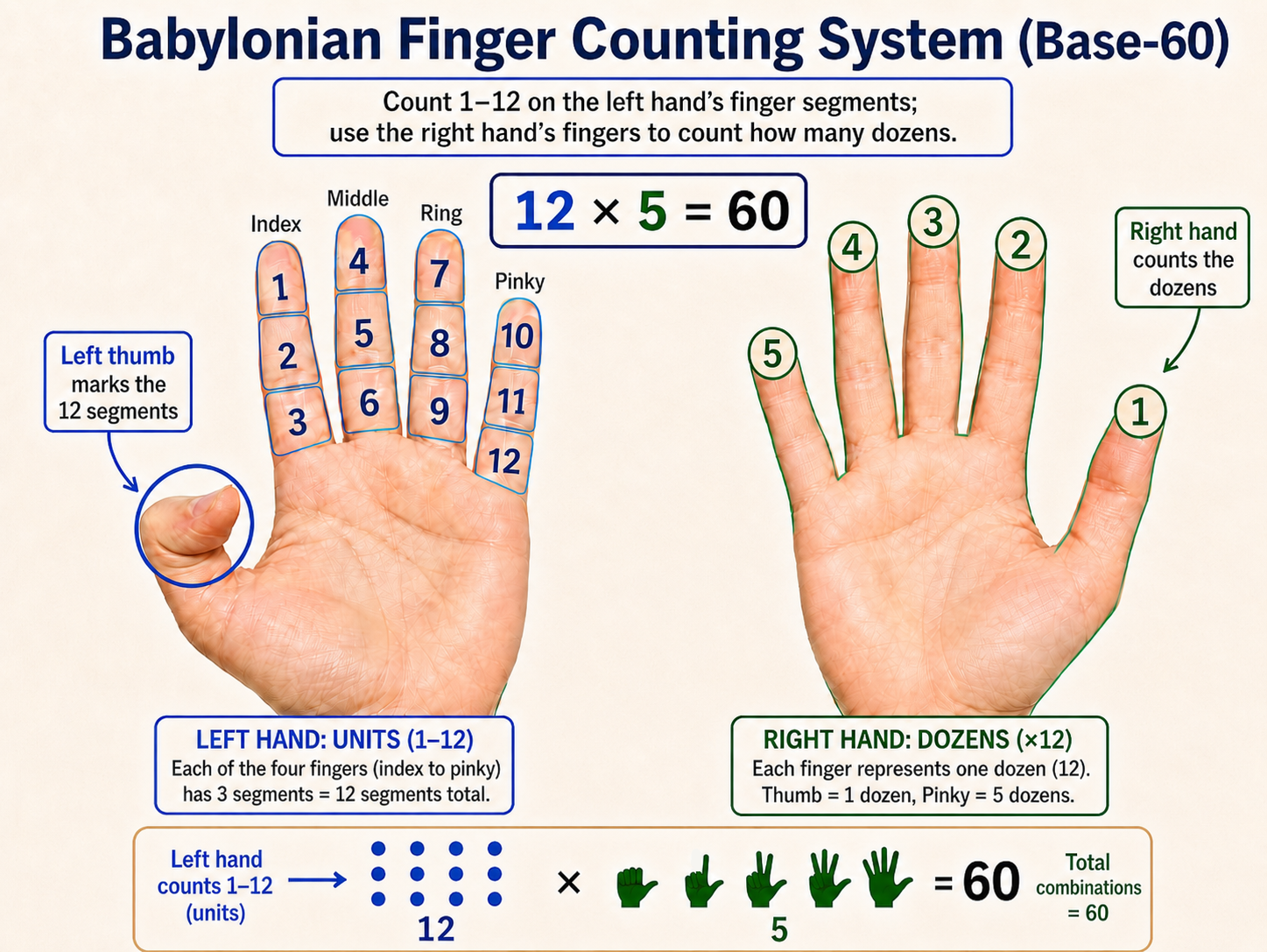
    NUMERACY: the Babylonian Finger Counting System as an inspiration for 24h and 100% Visualization Systems

    10 Sunday May 2026

    Posted by Ripsu-sama in mnemonics

    ≈ Leave a comment

    Tags

    base systems, embodied cognition, finger counting, mental math, number systems, numeracy, percentages, time visualization

    Continue reading →

    IMAGINATION ENGINEERING: 21 Foundational Thought Operations

    29 Sunday Dec 2024

    Posted by Ripsu-sama in AI theory, cognitive architecture, cognitive modeling, imagination engineering, philosophy, thought operations

    ≈ Leave a comment

    Tags

    agi, ai, cognition, cognitive architecture, conceptual engineering, Creativity, imagination, philosophy, science, thought operations

    Based on the author’s discussion with ChatGPT o1, below is a concise list of some foundational thought/imagination operations we’ve identified so far, each with a short description.

    This list is one possible ordering of these operations, arranged from most foundational (simple transformations on what’s already present) to more complex (involving abstraction, context shifts, and temporal or evidential reasoning). Of course, any such ordering is subjective; different thinkers might sequence them differently based on how they conceptualize “foundational.” Still, this list gives a helpful progression from basic acts to more advanced cognitive maneuvers.


    1. Addition or Subtraction

    • Definition: Including or removing elements or phases from a mental construct.
    • Example: Expanding a story by adding a new character, or simplifying a recipe by cutting out ingredients.

    2. Partitioning or Unifying

    • Definition: Splitting elements or phases into distinct parts, or merging multiple elements or phases into a whole.
    • Example: Breaking a problem into smaller subproblems, or consolidating scattered notes into a single outline.

    3. Enumerating

    • Definition: Systematically listing or mapping out all possible combinations or permutations to ensure none are missed.
    • Example: Pairing {red, blue, green} with {circle, square, triangle} to generate nine distinct design ideas.
    Continue reading →

    PHILOSOPHY: Methods of Thinking in Plato’s Dialogues

    20 Wednesday Nov 2024

    Posted by Ripsu-sama in philosophy

    ≈ Leave a comment

    Tags

    aristotle, critical-thinking, dialectic, philosophy, plato, reasoning, socrates

    The following are a series of brilliant AI-generated Step-by-Step Guides for Thinking in the same way as Plato, the brilliant philosopher. The AI used was Google’s Gemini 1.5 Pro with NotebookLM, as presented with the five volumes of Benjamin Jowett’s public domain 1871-1875 translations of Plato into English.

    CONTENTS LIST:

    1. Methods of Thinking in Plato’s Dialogues
      1.1. Dialectic
      1.1.1. Dialectic: Definitions
      1.1.2. Dialectic: Division and Generalisation
      1.1.3. Dialectic: Elenchus (Socratic Method)
      1.2. Hypothetical Reasoning
      1.3. Anamnesis (Recollection)
      1.4. Analogy and Illustration
      1.5. Myth and Allegory
      1.6. Irony
    2. Main Subject Matters in Plato’s Dialogues, a List
    Continue reading →
    ← Older posts

    Subscribe

    • Entries (RSS)
    • Comments (RSS)

    Archives

    • June 2026
    • May 2026
    • December 2024
    • November 2024
    • January 2024
    • December 2023
    • November 2023
    • October 2023
    • June 2020
    • September 2019
    • August 2019
    • August 2018
    • April 2018
    • March 2018

    Categories

    • AI theory
      • cognitive modeling
        • imagination engineering
    • chess
      • chess analytics
      • chess theory
    • cognitive architecture
      • thought operations
    • mathematics
      • physics
        • applied physics
    • mnemonics
    • philosophy
    • Uncategorized

    Meta

    • Create account
    • Log in

    Blog at WordPress.com.

    • Subscribe Subscribed
      • Thinking Metrics
      • Already have a WordPress.com account? Log in now.
      • Thinking Metrics
      • Subscribe Subscribed
      • Sign up
      • Log in
      • Report this content
      • View site in Reader
      • Manage subscriptions
      • Collapse this bar
    Loading Comments...